Safety belts
From the Resto-Mod department
Victoria makes you ride safe: tighten your seat belt and ready for take-off !When the car was purchased in 1963, seat belts were neither mandatory equipment nor even available as an option. Although early restraint systems had been experimented at the beginning of the 20th century, they only became widely adopted from the 1970s onward. Interestingly, the growth of the aviation industry strongly influenced automotive engineering during the 1950s, leading several American car manufacturers to offer simple lap belts as optional equipment.
The major breakthrough came in 1959, when Volvo introduced the three-point seat belt design. This is the same type that equips Victoria’s front seats today. It was only in 1968 that U.S. legislation required new cars to be fitted with seat belts, while mandatory seat belt use became widespread progressively during the 1980s. Today, thanks to continuous safety improvements, seat belts are estimated to reduce front-seat passenger fatalities by around 50%.
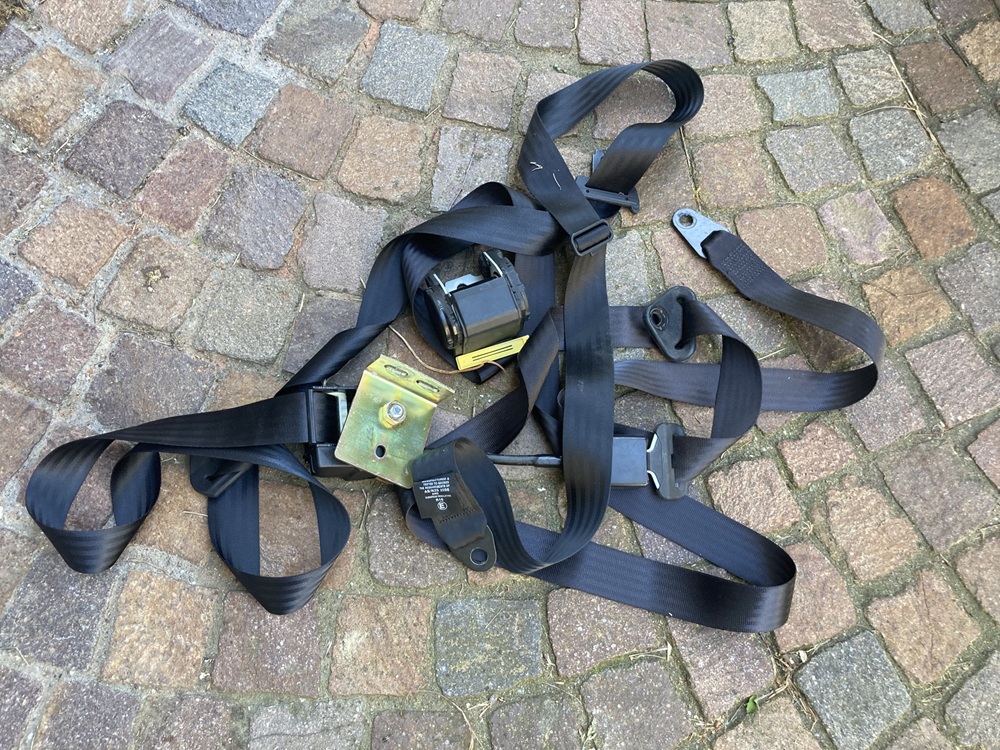
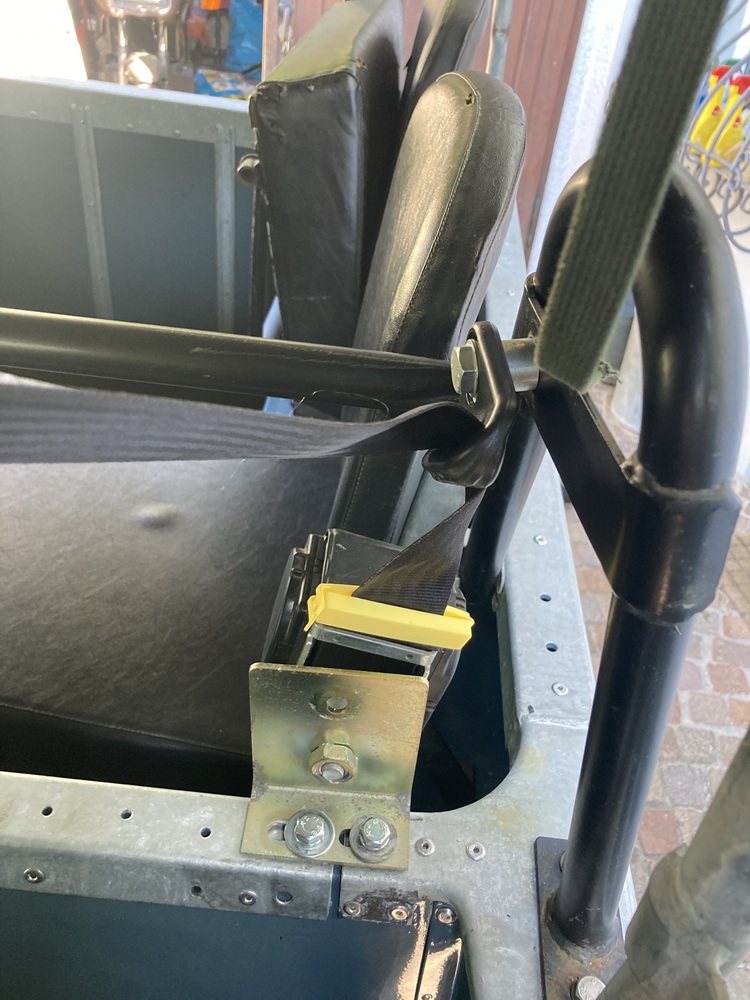
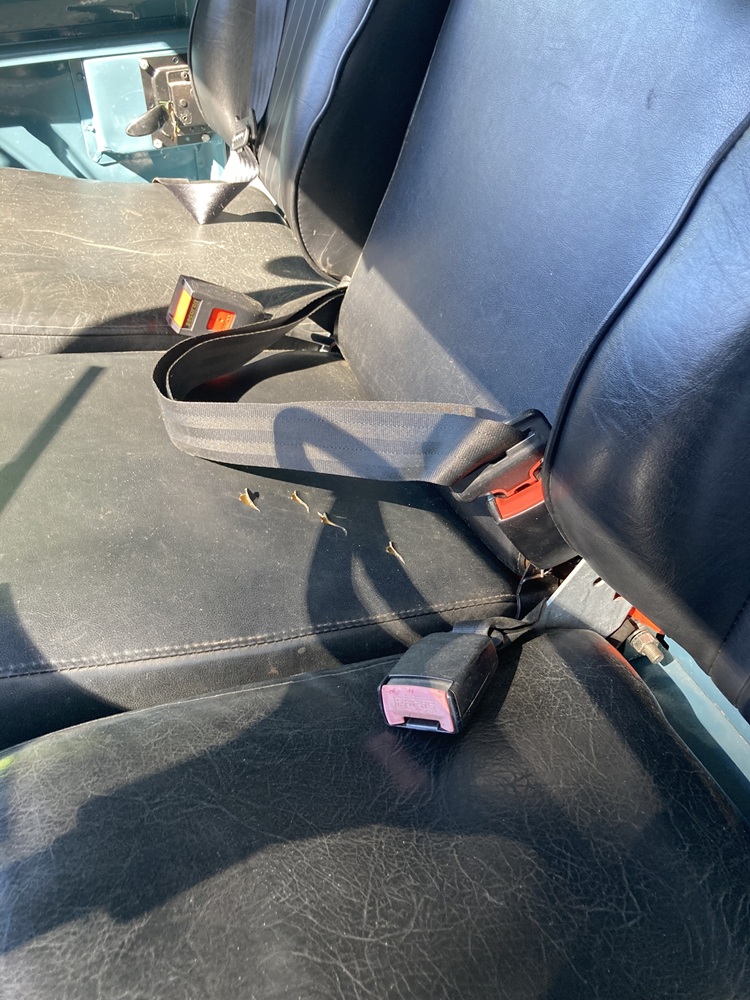
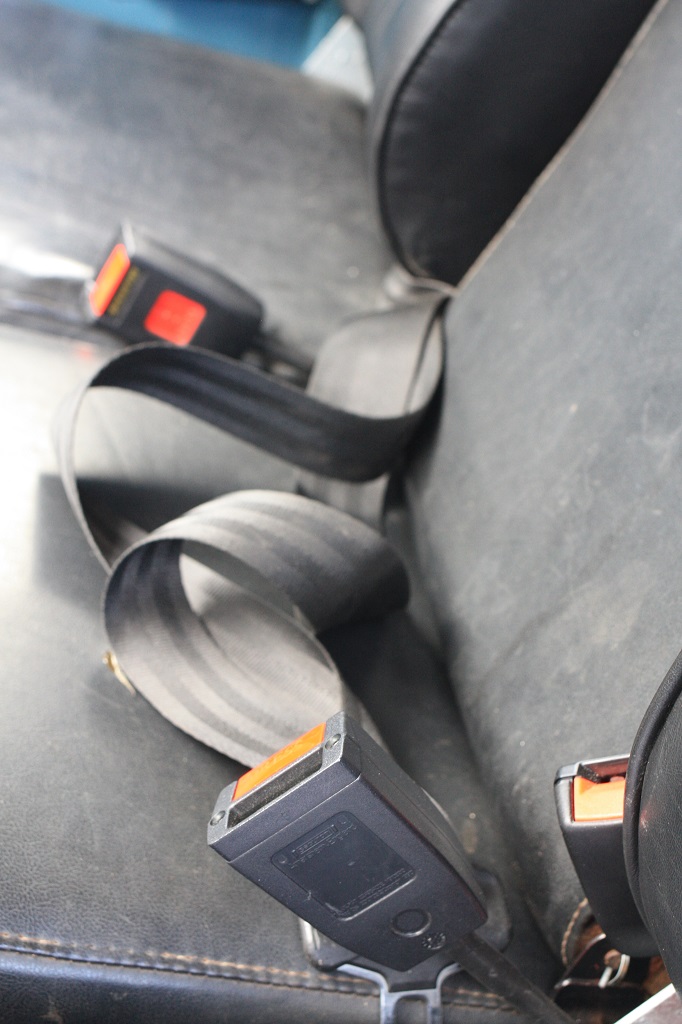
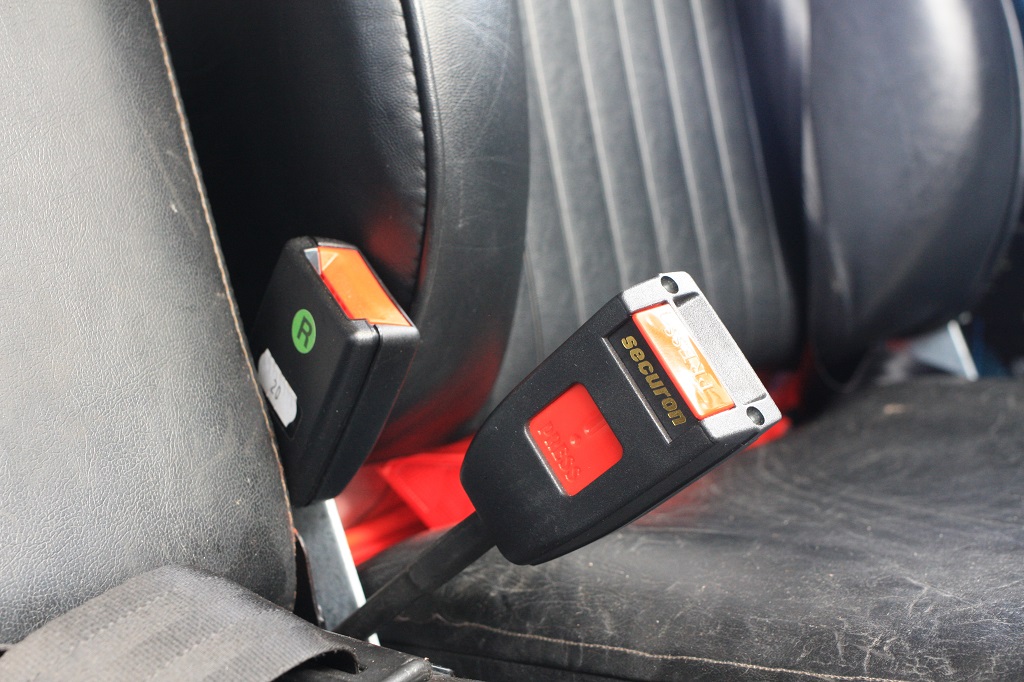
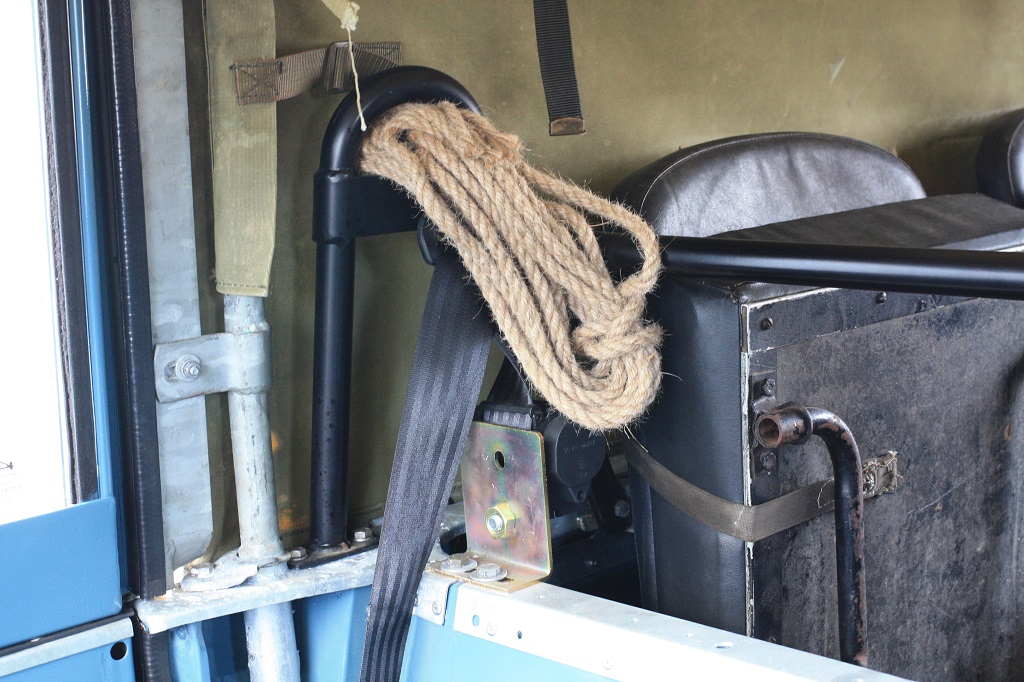
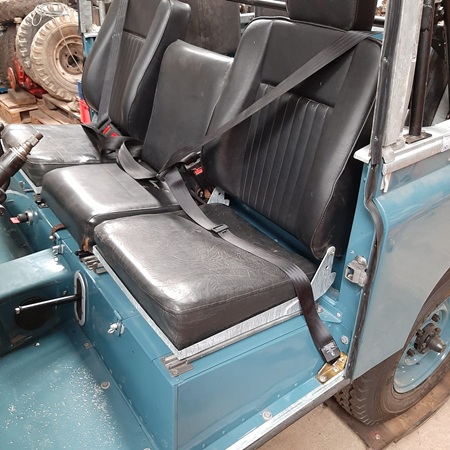
Victoria received safety belts as one of its earliest upgrades after being purchased in 1996. Two inertia-reel belts were fitted to the main seats, along with a static lap belt for the middle seat. Later, when foldable rear seats were installed, matching static lap belts were added at the back.
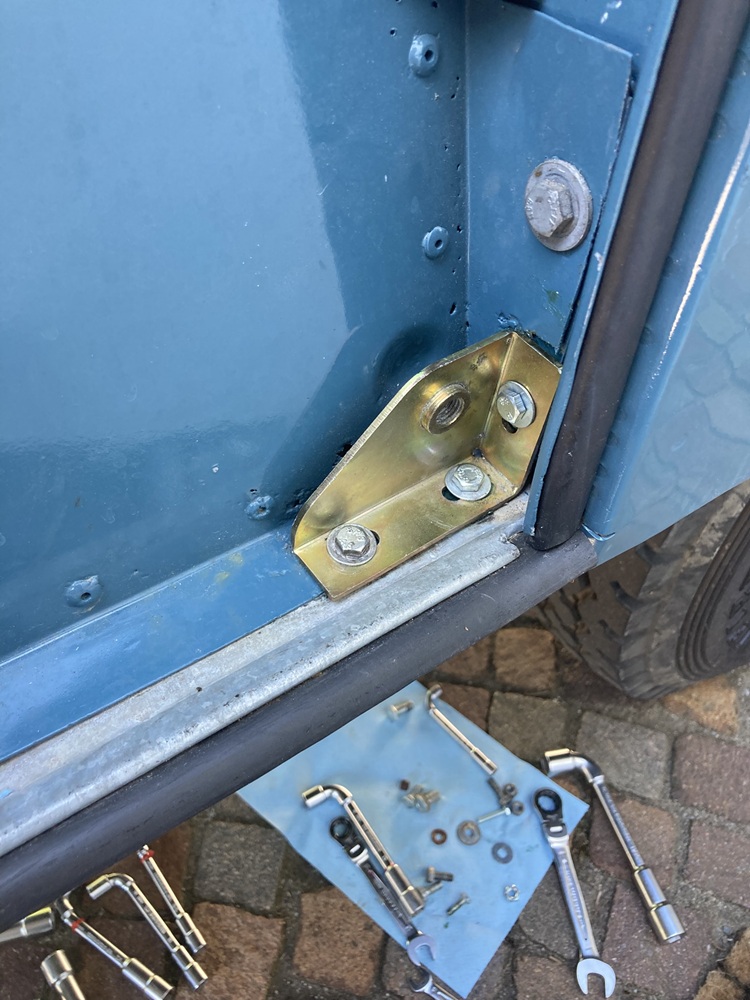
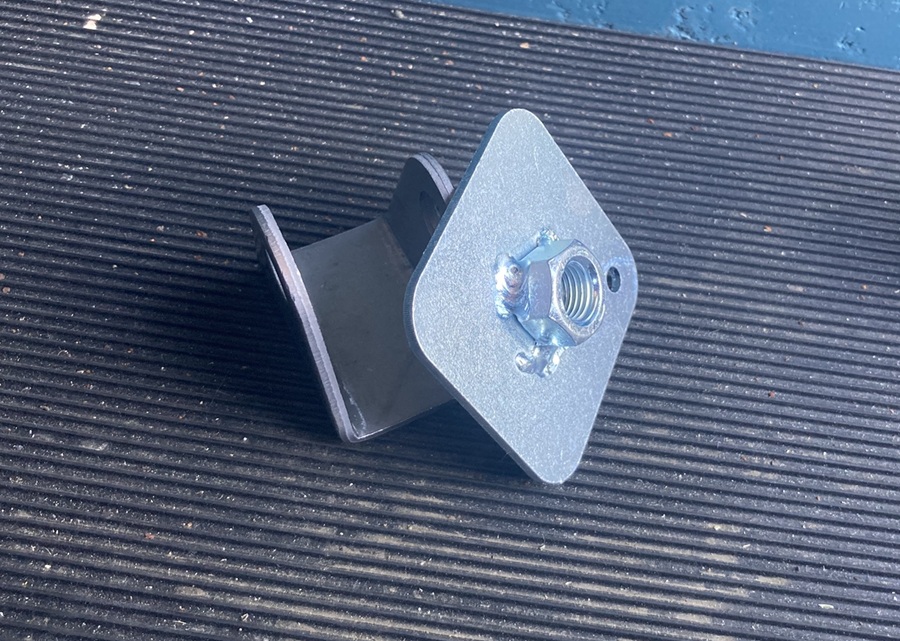
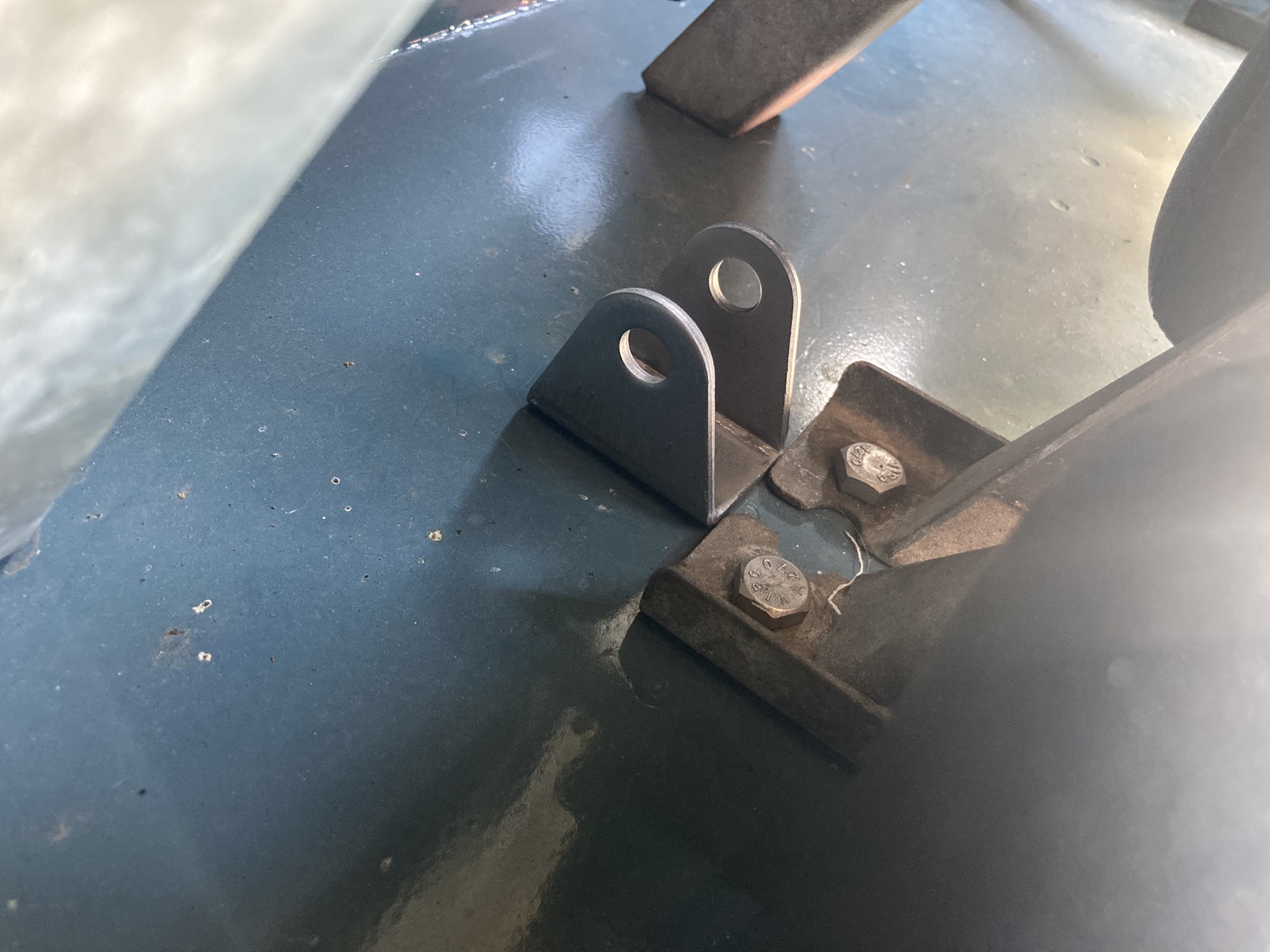
One of the key rules when fitting seat belts in a Land Rover is to use thick reinforcing plates behind the mounting points. The aluminium alloy body panels are not structurally strong enough on their own to guarantee adequate belt anchorage strength in the event of an impact.