Photography on the road
Along with your camping gear and daily tools
The below is not intended to explain photography. There are millions of specialised websites about that, with true connoisseurs that would explain things much better than I would ever be able to. So, as usual on this website: it is more an overview of practical considerations for the Land Rover enthusiast, willing to travel with some quality gear, compatible with rough tracks.
Vintage ? A film camera from the seventies looks at home in a classic Land Rover, but for travelling with family and friends, I prefer digital. The car already provides enough mechanical nostalgia. Of course, today's equipment can hardly avoid being made of plastic and/or having a battery somewhere, even for things that were perfectly doing the job without any of the two. Even if the idea is not to shop for the latest trendy accessory, but on the contrary to give to existing objects a second lease of life, the concept has clear limits in photography.
Digital photography
Practical freedoms
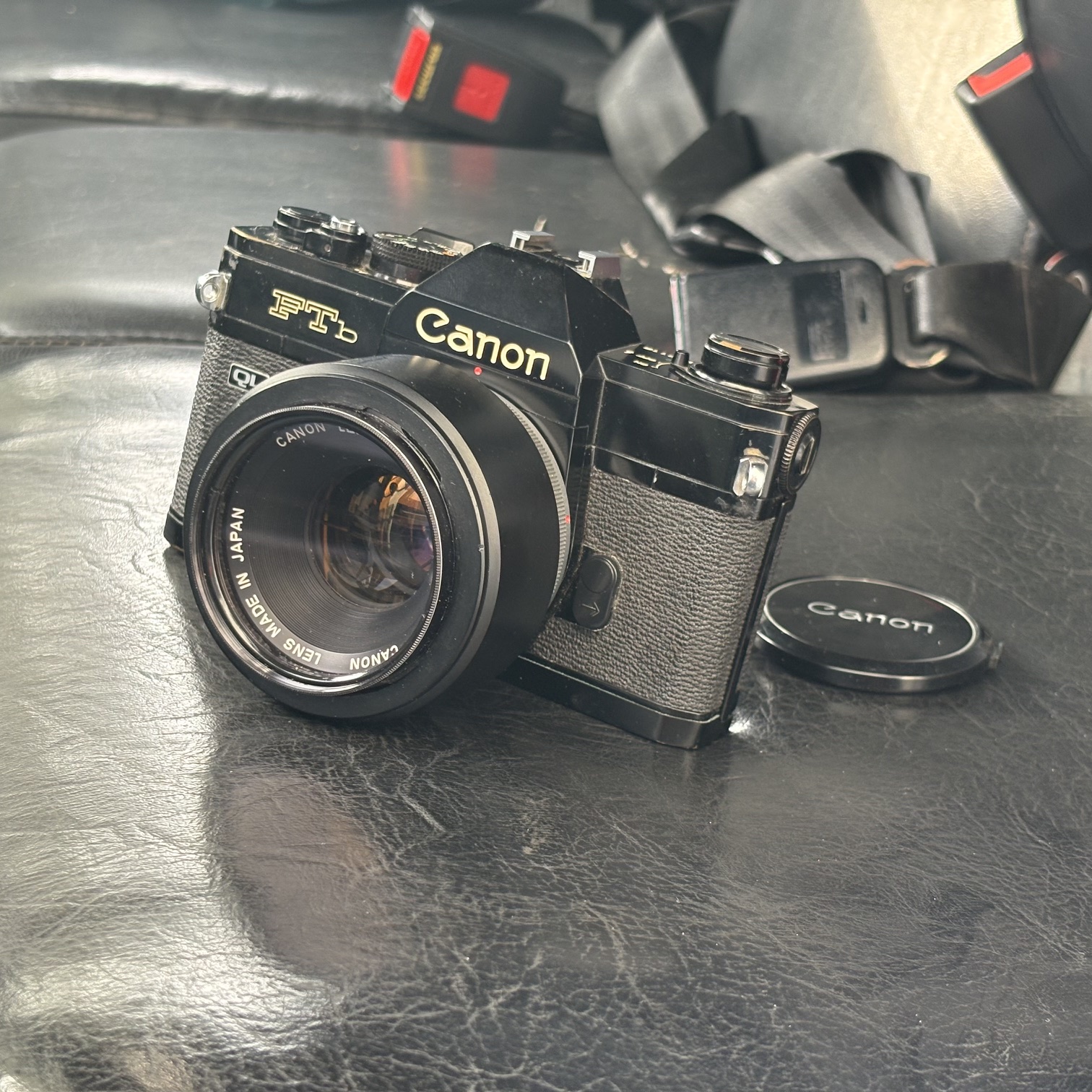
My father gifted me his 1979 CANON FTb as I was a teenager, so forgive me if I still stick with CANONs 40 years later. I still have this FTb and
(like so many old things of that time) it still works like a charm !
The Canon FTb was a carefully designed mechanical camera. It had a smooth shutter action, a generous viewfinder and a clear exposure meter that
measured a defined area in the centre of the frame. Film loading was straightforward,
thanks to Canon’s QL system, which removed the hassle to thread the film onto a spool.
Its cleverest feature was the depth-of-field preview lever: as a kid, I was in love with it. A press closes the aperture so you can judge the zone of sharpness. Releasing it
immediately restores the bright view. It can also be locked in place, while a separate mirror lock-up adds control for deliberate shooting.
Canon never reproduced this combination with the same convenience on later bodies, even its professional cameras.
Now... Analog is nice and cute but digital cameras were not just a trend: it did make sense (for once) to embrace the change.
Still not convinced ? Jump there for the perfect blend.
With digital, you could validate / delete / reshoot a picture immediately. Photograph action in bursts. Experiment without paying for every (limited) frame.
There is no film to protect from heat or find somewhere someone to develop, at considerable cost per (viable) image.
Most importantly, you can safely store away your photographs along the way.
Actually, I don't think the brand matters. Grab any camera that makes you believe you are an artist !

Buy for the journey
Think priorities
My priorities are straightforward: solid construction, manageable size and weight, the whole at a price that lets me actually use the equipment. A camera that stays packed away because it is too precious achieves very little.
For this, I favour good second-hand reflex cameras (DSLR). Older bodies can offer excellent value. A DSLR is not automatically better than a mirrorless camera or a bridge camera... but let you choose the lens from a breadth of choice.
My choice is currently a Canon EOS 6D Mark II, introduced in 2017. It is not pocket-sized, but its grip and reasonnable weight (685g) make it easy to live with. Its burst rate of up to 6.5 frames per second is good enough for passing Land Rovers and children playing. The "6D II" is a full-frame digital SLR camera best suited for portrait photography, event and wedding coverage, general travel and hobbyist use stepping up from an APS-C crop-sensor body
Canon specifications of this camera.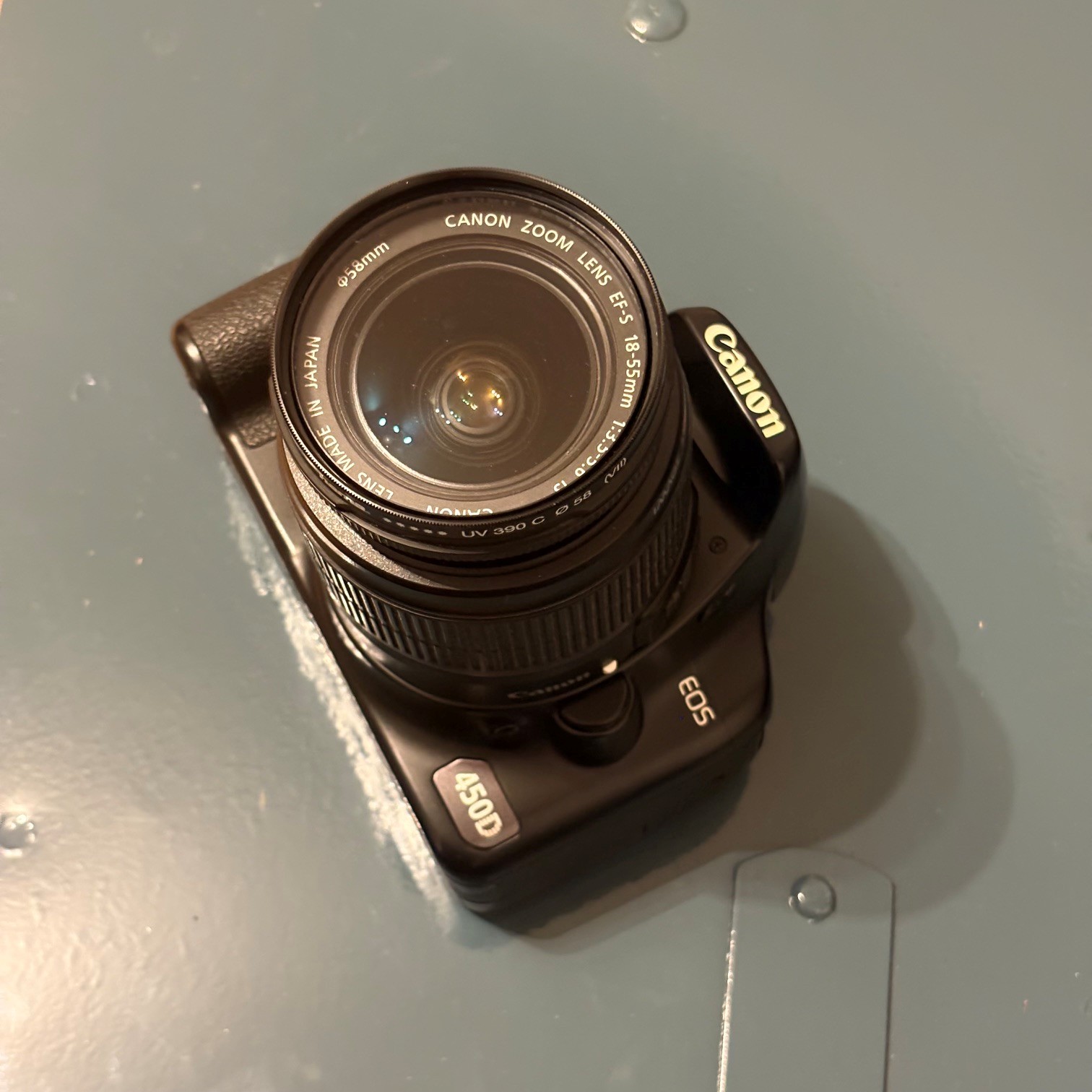
Spend on the lens
Lense shapes; body records
The photographer still has to find the light and the moment !
Spend on the lens (bis)
Fixed focal or zoom
- Larger maximum aperture: better low-light performance and background blur.
- Smaller size and weight: true for compact primes. Some fixed focal lenses are huge and weigh a ton !
- Simpler composition: you physically move closer or farther away instead of zooming. These comments are valid for the average hobbyist: a premium zoom outperforms by far an inexpensive prime. The fundamental trade-off is optical specialization vs versatility. A prime lens is optimized for one focal length, while a zoom must perform across a range. Well, because of that, I must travel with two or three small "prime" lenses.
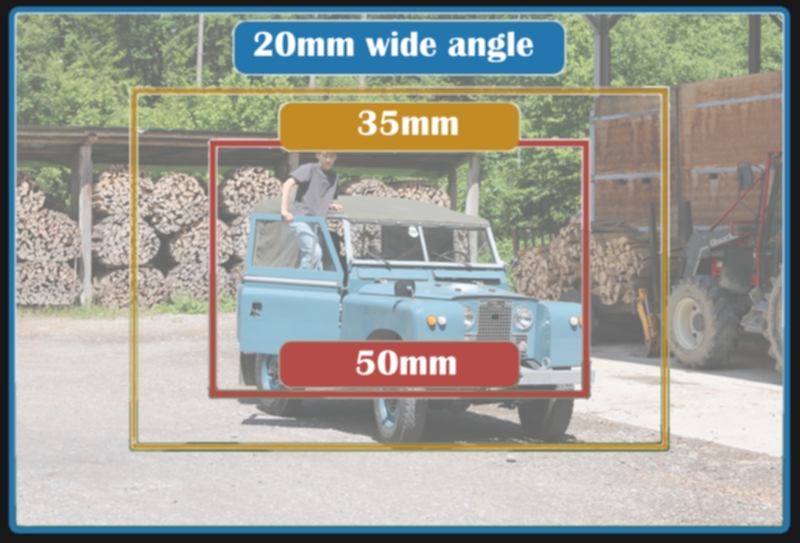
Which one to pack ?
No compromise !
This is where DSLR with a 50mm or 35mm lens give you more control over distance.
For landscape photography, a modern smartphone can produce surprisingly good results, sometimes even more visually appealing than a DSLR. With a good prime "wide" lens, you can preserve natural textures in nature and distant architecture without aggressive computational sharpening. That is why photographers still bother to carry the extra load: heavier, delicate and expensive, but worth the effort for the faithful memories they want to bring back.
50mm lens, taken from far away and cropped to size.
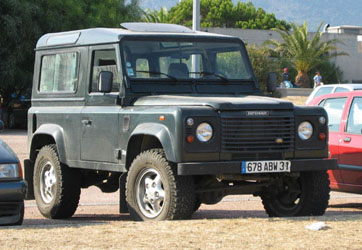
Proportions are realistic and faithful.
24mm wider lens from closer, cropped to size.
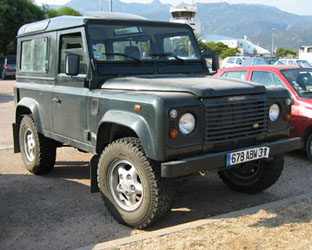
Perspective deformation, exageration.
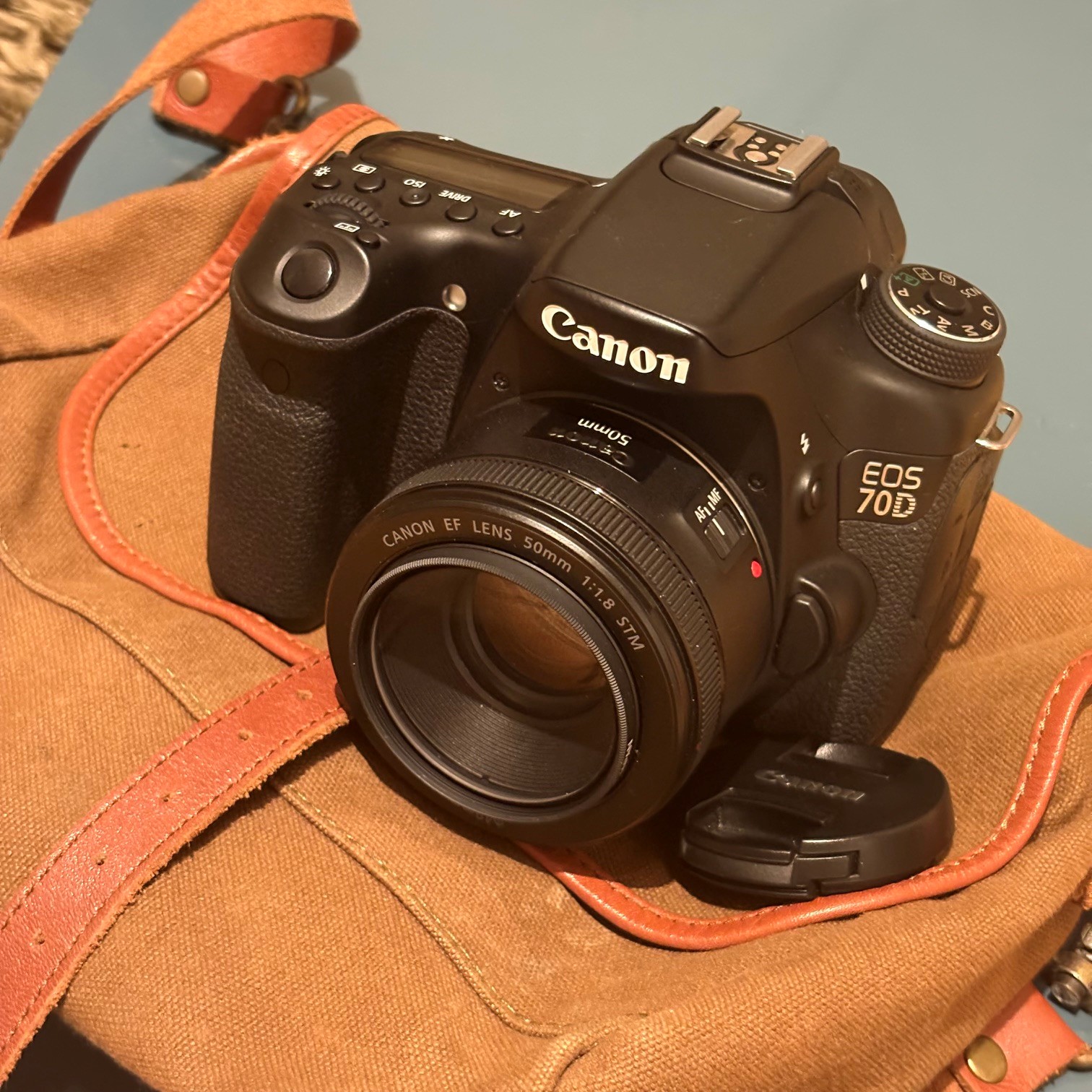
Canon EF 50mm f/1.8 STM (2015)
For portraits and details
- Inexpensive: costs around CHF 100 making it one of the most affordable prime lenses available, yet capable of sharp pictures !
- Beautiful background blur: the 7-blade circular aperture creates a soft background separation (bokeh) for portraits. On my EOS 6D (full frame), its framing is matching human vision closely. This is my favorite day-to-day lens, the one to bring along if only one must be brought. The reviews usually highlight its metal mount and more reliable focusing than its predecessor, which are valuable qualities for equipment used daily on the road. Its wide f/1.8 aperture helps when daylight fades, allowing faster shutter speeds without flash.
Canon specifications of this lens.
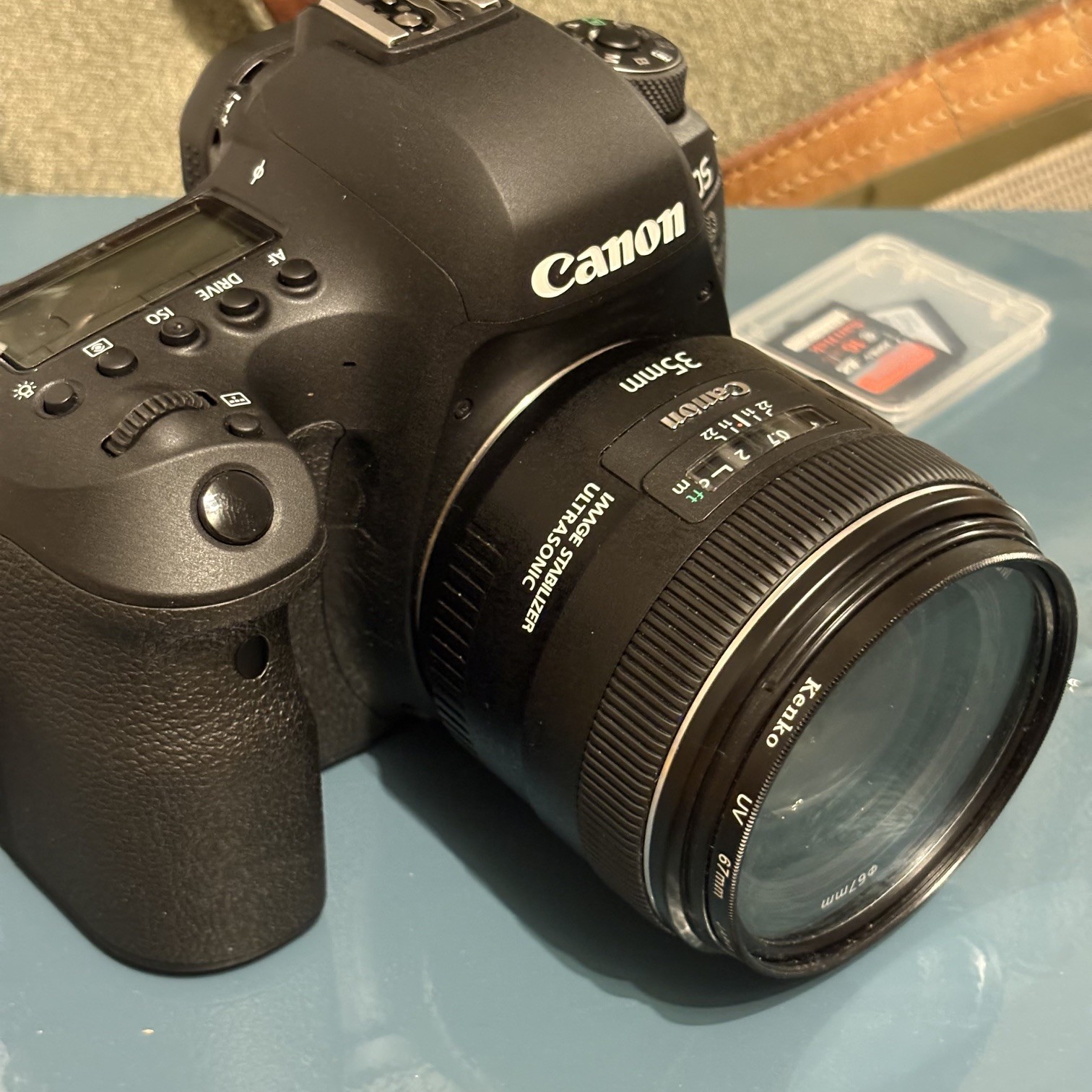
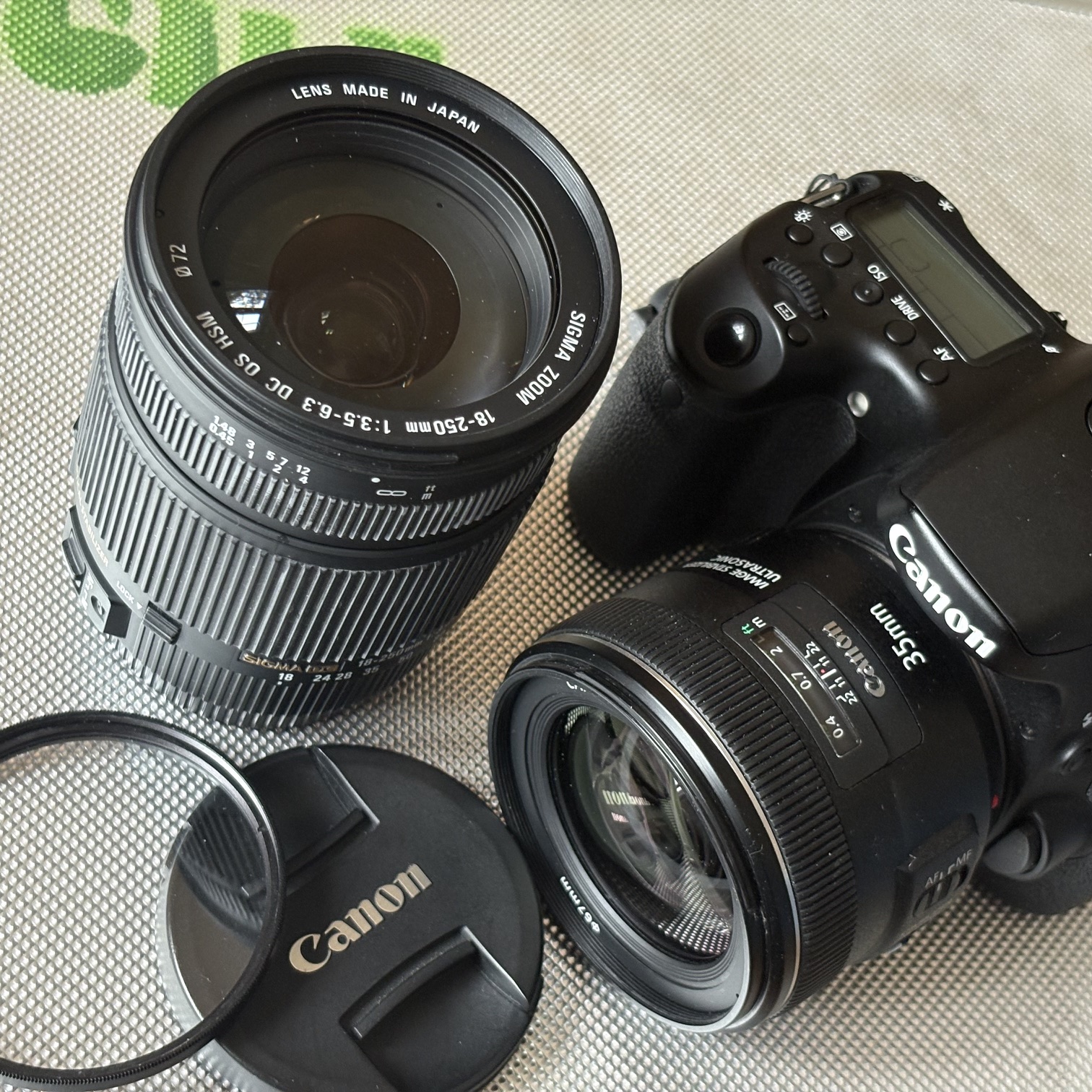
Canon EF 35mm f/2 IS USM (2012)
Carryaround lens
- Documentary use: compact and manageable weight (336g), it is easy to keep mounted on your camera all day without fatigue or drawing unwanted attention.
- Low-light shooting: an f/2 aperture lets in more light than a standard kit zoom lens. It gives extra flexibility as daylight fades. Good for evening drives or portraits without flash. On the 6D Mark II, this is an excellent reportage and travel lens. Its particular strength is photographing people, places and atmosphere together, with enough optical quality and low-light capability to serve as a primary everyday lens.
Canon specifications of this lens.
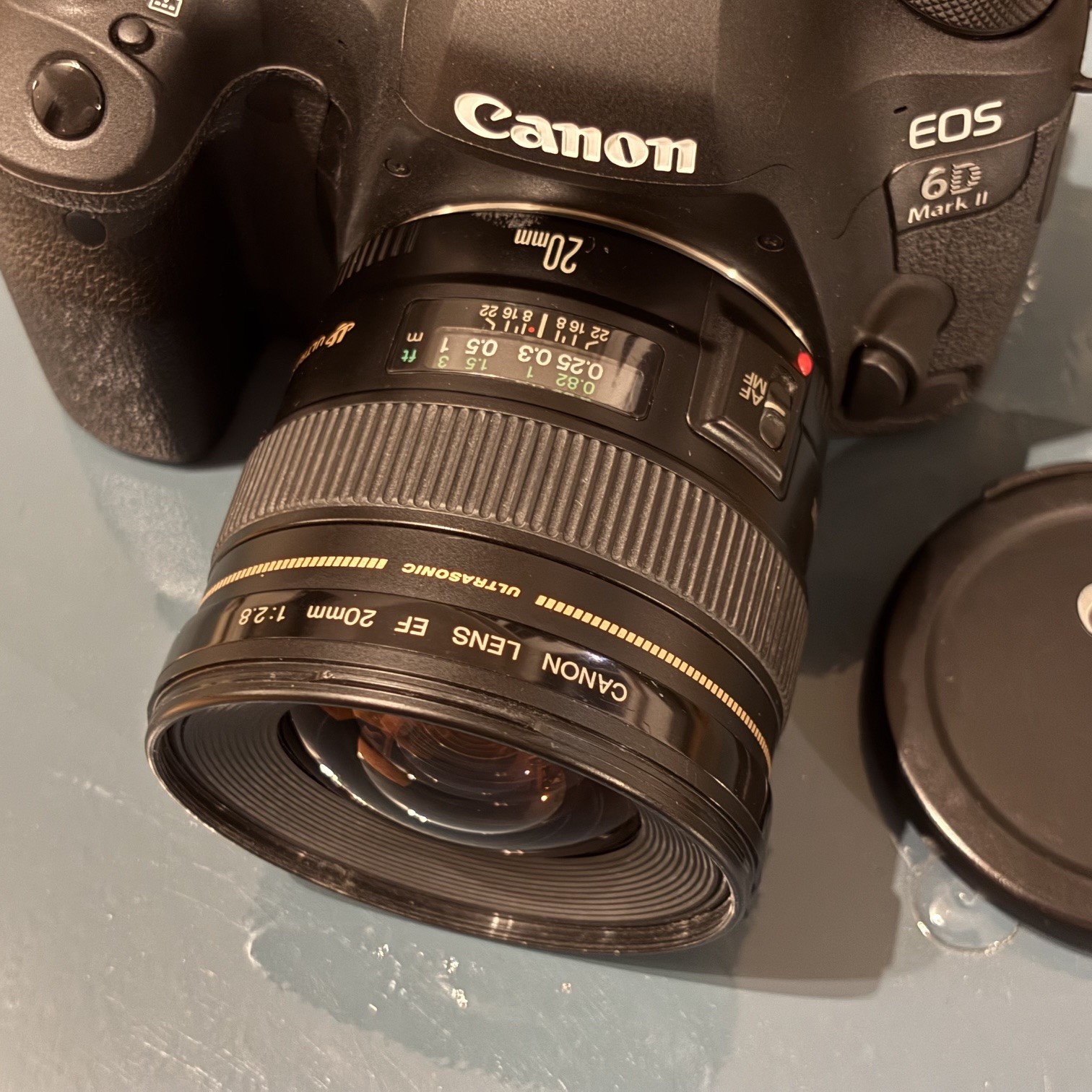
Canon EF 20mm f/2.8 USM (1992)
Ultra-wide perspective
- Close-up photography: minimum focusing distance of 25cm. Particularly effective for placing a foreground subject within a dramatic, wide background.
- Practical design: relatively compact (405g), with USM autofocus and a 72mm filter thread. No image stabilisation.
- Compared with modern wide-angle designs: it lacks contemporary conveniences such as stabilisation (the famous "IS"), weather sealing and sophisticated digital-era optical correction. The EF 20mm f/2.8 USM is interesting today as a compact, characterful ultra-wide prime. Canon specifications of this lens.
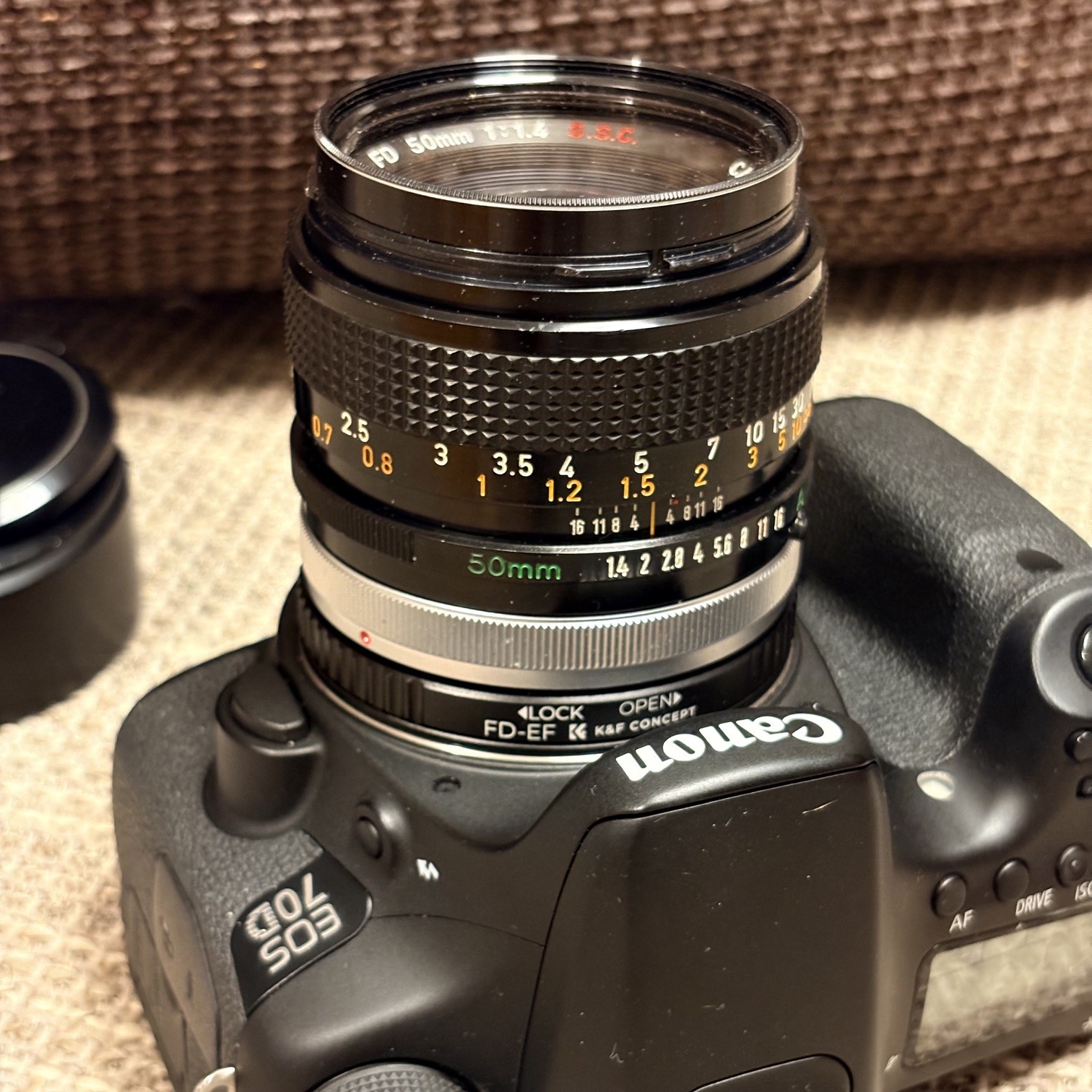
VINTAGE ! Canon FD 50mm f/1.4 S.S.C. (1973)
You've lost that lovin' feelin'
An interesting historical detail: Canon's later EF 50mm f/1.4 USM inherited much of its optical design from the original FD 50mm f/1.4. The fundamental optical formula was already mature in the 1970s. An independent March 2026 laboratory test found the FD lens surprisingly capable: good central resolution even at f/1.4, substantial improvement by f/2.8, and its best overall performance around f/4–f/5.6. Its weaknesses were pronounced vignetting and colour fringing at large apertures. - Manual focus and aperture set on the lens. Live View magnification can help achieve accurate focus !
- Colour rendition: generally natural colour and contrast.
- Construction: that lovely mechanical feel: metal construction (350g) and precise manual focusing.
- S.S.C. coating: Canon's Super Spectra Coating improves flare resistance and contrast compared with older coatings. On the 6D Mark II, a vintage FD lens must be appreciated for a distinctive rendering and photographic experience, rather than expect it to outperform any modern EF lens. Canon specifications of this lens.
Check out if this setup is made for you.
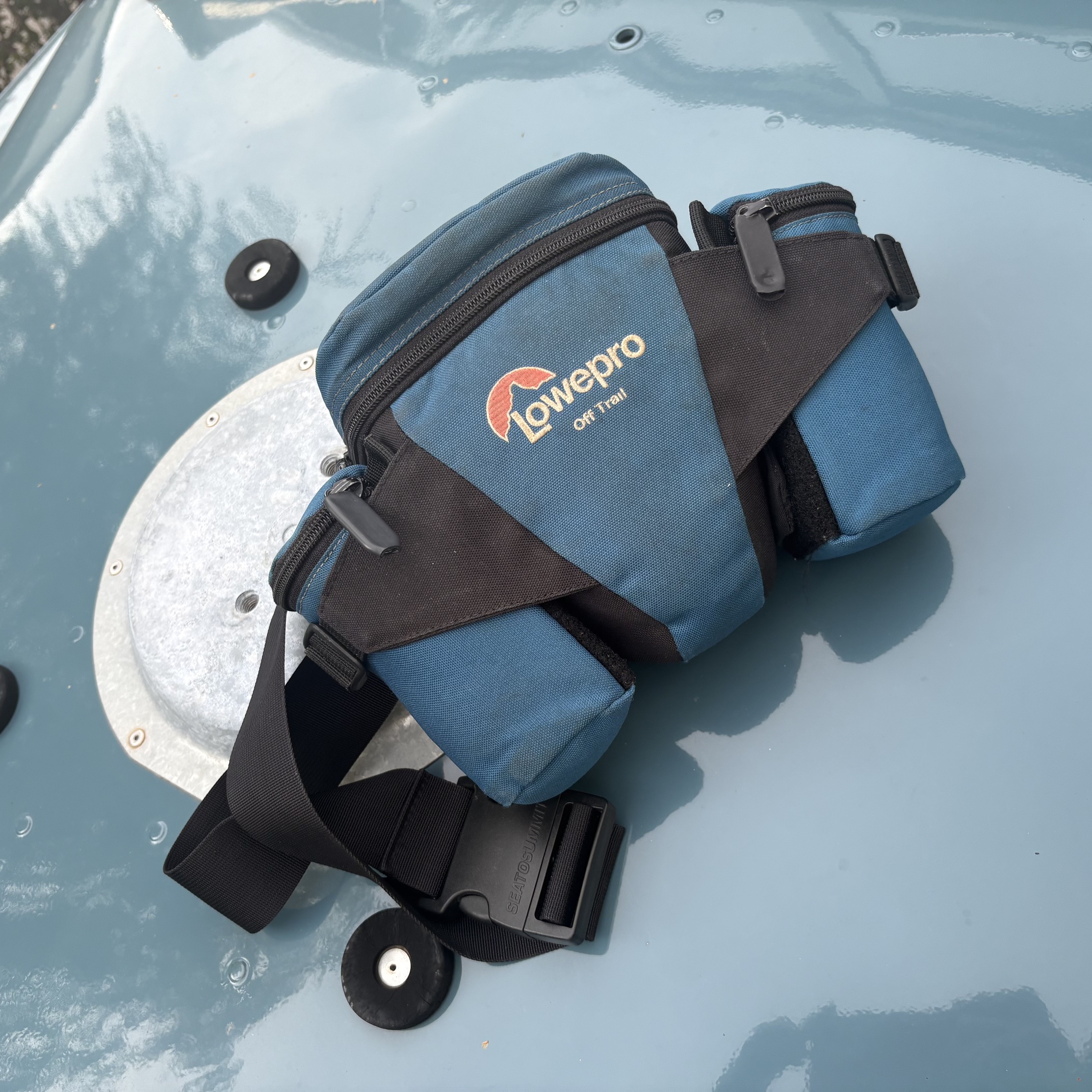
Protective Bags for DSLR Cameras
Keep your camera safe wherever you go.
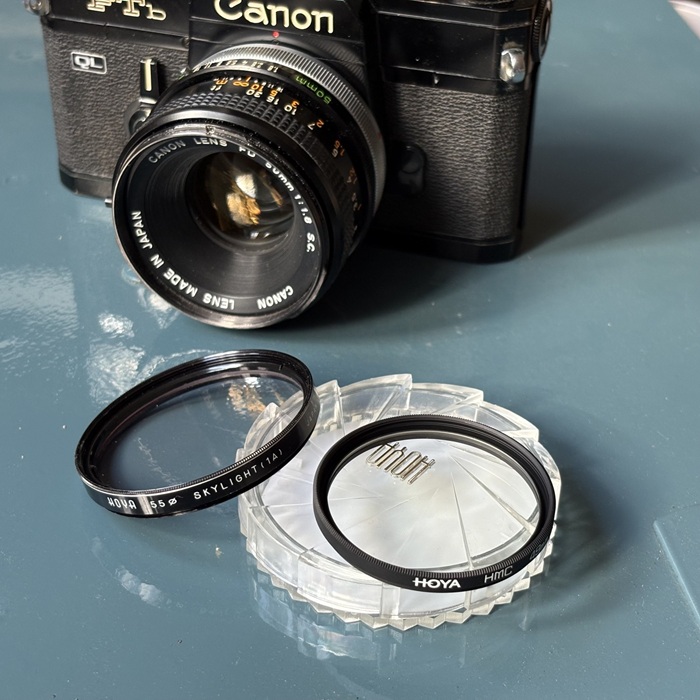
Talking about protection
Filters as extra layer
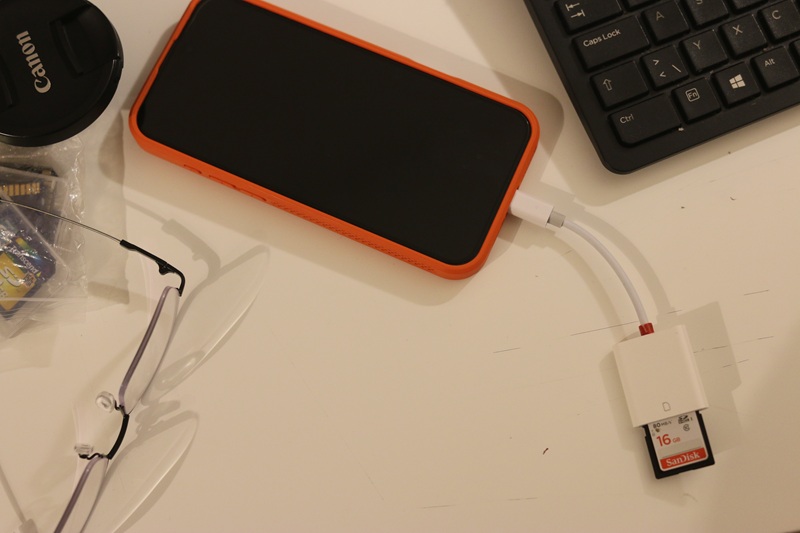
Daily backups
Hardware can evaporate
Equipment can be replaced. The photograph of your friends beside the Land Rover, at the end of a very good day, cannot. I learned that the hard way with a stolen digital camera in Budapest...