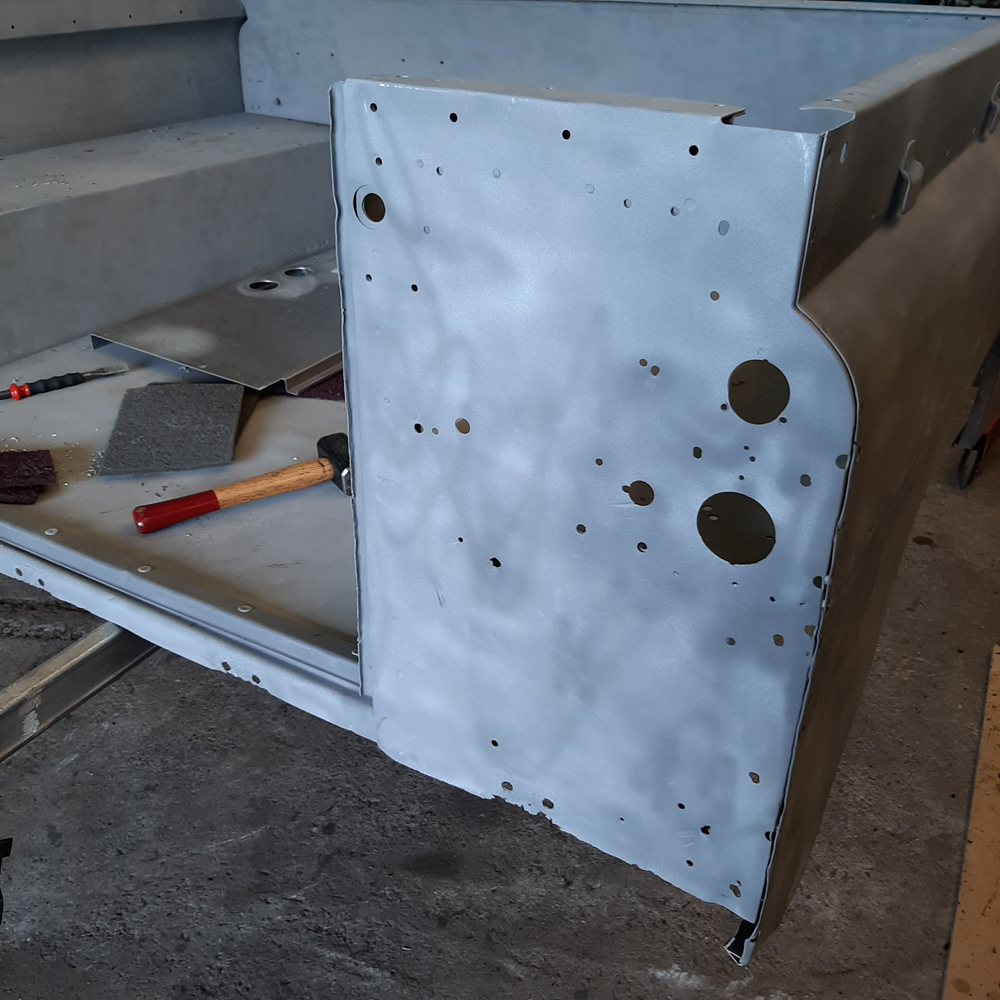
Bodywork
From the Resto-Mod department
The bodywork of the classic Land
Rover, from the Series I through late Defender models,
is renowned for its rugged and utilitarian design. Its
shape is unmistakably boxy, with flat panels and
minimal curves, a deliberate choice that made
manufacturing and repairs straightforward. This
simplicity extended to its modular construction,
allowing individual panels to be removed and replaced
easily, which was especially useful in remote or harsh
environments.
One of the most distinctive aspects of the Land Rover’s bodywork is the material used. Instead of steel, which was in short supply after World War II, Land Rover opted for an aluminum-magnesium alloy known as Birmabright. This choice gave the vehicle excellent resistance to corrosion, making it ideal for use in tropical climates, deserts, and wet regions. However, while the body panels were rust-resistant, the steel chassis and bulkhead were more vulnerable to rust, especially if exposed to moisture or road salt over time.
In terms of durability, the Land Rover’s bodywork has proven exceptionally resilient. Most cars from the 1950s and 60s are still looking good today, a testament to their longevity and the ease with which they can be maintained. The design also prioritized repairability—owners could fix dents, replace panels, or even rebuild sections with basic tools and minimal expertise. This practicality, combined with a high degree of parts interchangeability across models and years, made the Land Rover a favorite among adventurers, farmers, and military forces alike.
Overall, the bodywork of the classic Land Rover is a perfect example of form following function. It’s not elegant in the traditional sense, but its durability, simplicity, and adaptability have earned it a legendary status in automotive history.
One of the most distinctive aspects of the Land Rover’s bodywork is the material used. Instead of steel, which was in short supply after World War II, Land Rover opted for an aluminum-magnesium alloy known as Birmabright. This choice gave the vehicle excellent resistance to corrosion, making it ideal for use in tropical climates, deserts, and wet regions. However, while the body panels were rust-resistant, the steel chassis and bulkhead were more vulnerable to rust, especially if exposed to moisture or road salt over time.
In terms of durability, the Land Rover’s bodywork has proven exceptionally resilient. Most cars from the 1950s and 60s are still looking good today, a testament to their longevity and the ease with which they can be maintained. The design also prioritized repairability—owners could fix dents, replace panels, or even rebuild sections with basic tools and minimal expertise. This practicality, combined with a high degree of parts interchangeability across models and years, made the Land Rover a favorite among adventurers, farmers, and military forces alike.
Overall, the bodywork of the classic Land Rover is a perfect example of form following function. It’s not elegant in the traditional sense, but its durability, simplicity, and adaptability have earned it a legendary status in automotive history.


